Online students in 47 countries — and counting

The Musical
Dojo
Your pathway to music mastery

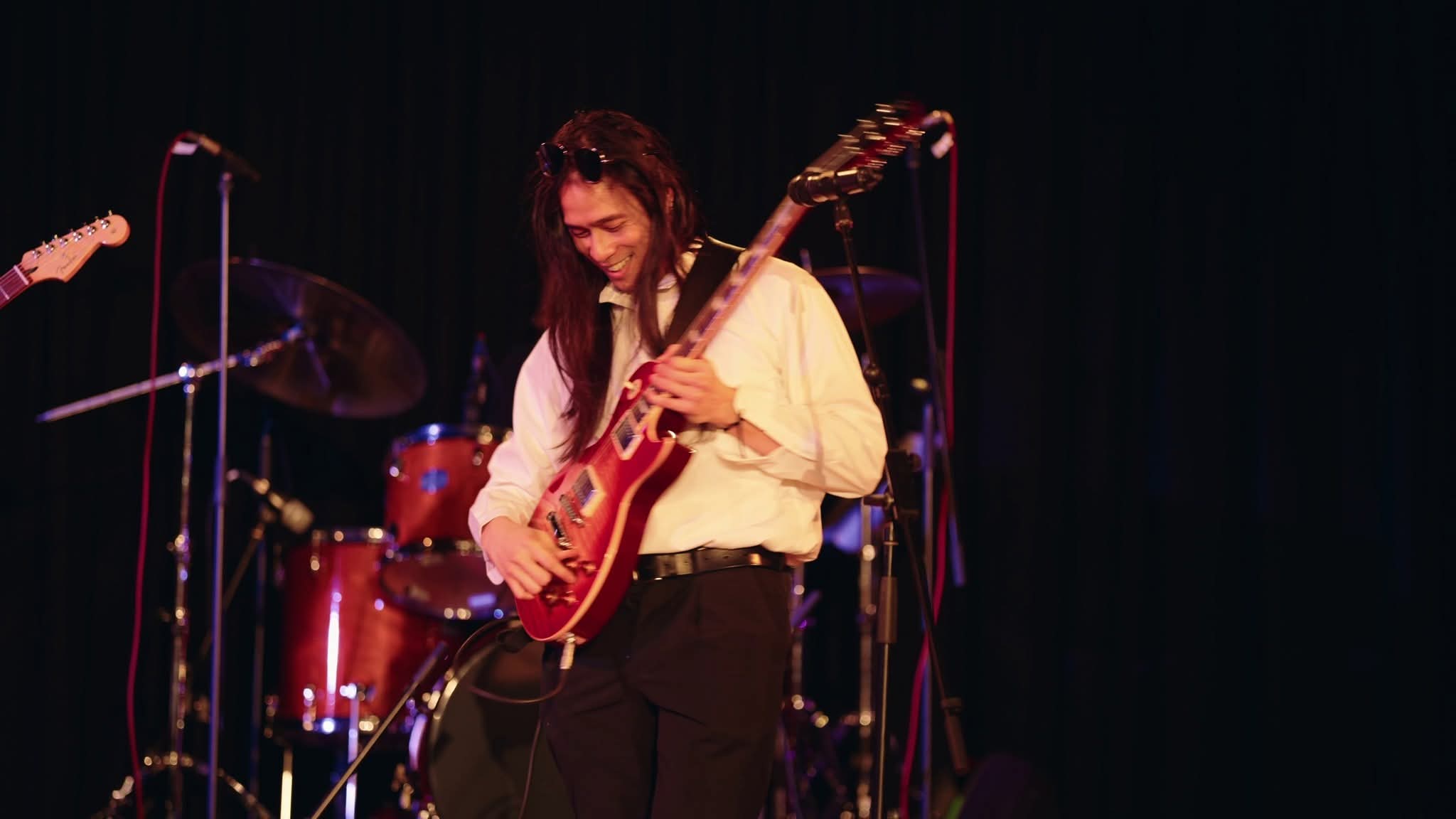
Guitar, piano and ukulele — taught with the patience of a dojo and the ear of a working musician. I'm Ming Yao, a graduate of the Australian Institute of Music, and I'll walk the path with you from your very first note.

初心 Shoshin — beginner's mind. It's the most respected rank in this dojo.

47 countries
and counting
3 disciplines
taught
AIM Australian Institute
of Music graduate
All ages beginners to
returning players

Every timezone, one dojo. Students log in from Sydney to São Paulo to Seoul — if you have a connection and an instrument, the door is open.

 01 — The disciplines

Three instruments,
one patient teacher.

Every lesson is built around a piece you genuinely want to play. Theory arrives when it makes something easier — never as homework for its own sake.

Guitar

Acoustic, electric and nylon-string. From your first open chords to alternate picking, bends with real feel, comping over changes and true classical technique.

  • Chords, riffs & rhythm
  • Lead playing, scales & improvisation
  • Fingerstyle & classical technique
  • Tone, pedals & amp settings

Piano

Keys for people who want to play, not merely pass. Two hands together, chord charts, sight-reading, and enough jazz voicings to surprise yourself.

  • Reading music & chord symbols
  • Hand independence & rhythm
  • Jazz voicings & comping
  • Classical repertoire at your pace

Ukulele

Four strings, immediate reward. The shortest path from “I've never played anything” to “I played a whole song for my family.”

  • Your first song in lesson one
  • Strumming patterns & rhythm
  • Fingerpicking & chord melody
  • Ideal for children & true beginners

守破離  02 — The path

Shu. Ha. Ri.

Every dojo teaches mastery in three movements. It works just as well for a guitar neck as it does for a sword — you learn the form, you bend the form, and finally you forget it.

  1. Shu — follow the form

    Learn it properly.

    One way, done well. Posture, timing, clean chords, honest fundamentals. It's the least glamorous stage and the one that decides everything after it — so we make it sound good from week one.

  2. Ha — break the form

    Make it yours.

    Once the fundamentals are second nature, we start bending them. Your own phrasing, your own voicings, your own arrangement of a song everybody knows. This is where students start sounding like themselves.

  3. Ri — leave the form

    Simply play.

    The rules sink below conscious thought and disappear. You stop managing your hands and start making music — improvising, writing, playing with other people without fear.

 03 — The styles

Many schools,
one set of hands.

Training at AIM meant learning to move between styles without flinching. It's the part I most enjoy teaching — the same six strings, six completely different accents.

Rock

Power chords, riff writing, palm muting, and the arrangement instincts that make a band sound like a band.

Blues

The twelve bar, phrasing that breathes, vibrato with intent, and how to say a great deal with three notes.

Jazz

Extended chords, ii–V–I, walking bass lines, comping and improvising over changes without panic.

Metal

Down-picking stamina, tight rhythm playing, modes, sweeps and harmonised leads — built up safely.

Classical Guitar

Nylon-string discipline: right-hand tone production, rest and free strokes, posture, and real repertoire.

Songwriting

Turning the idea on your phone into a finished piece — structure, lyrics, demos and honest feedback.

YOUR PHOTO HERE images/ming-yao.jpg

Ming Yao — teaching since day one, still a student every week.

Graduate of AIM Australian Institute
of Music

先生  04 — Your sensei

Hello, I'm Ming Yao.

I trained at the Australian Institute of Music in Australia, where I spent my days doing what I'd been doing in my bedroom for years — except surrounded by people who pushed me to become fluent in styles I'd never touched.

That's why lessons here don't lock you into a single lane. One week we chase a metal riff, the next we voice a jazz chord, the next we slow a classical study down until your right hand behaves. It all feeds the same thing: playing music you're proud of.

These days my students log in from 47 countries — early mornings on one side of the world, late evenings on the other. Different accents, different taste in music, the same grin when a riff finally clicks.

No one is ever made to feel foolish in this dojo. Discipline, yes. Judgement, never.

  • Students from age 6 to 70+ — true beginners especially welcome
  • Exam preparation available, entirely optional
  • Online lessons worldwide, plus in-person locally
  • Notes, tabs and a practice plan after every single lesson
Say hello →

入門  05 — Entering

Four steps. No audition.

  1. Send word

    Message me with your instrument, your rough level, and one song you'd love to play.

  2. First lesson, free

    We meet, we play, I learn how you learn. No commitment and no sales pitch.

  3. Your path

    I map a route from where you are to what you want to play — with real music along the way.

  4. Weekly training

    The same time each week, notes after every session, and progress you can actually hear.

稽古  06 — Training

Plainly priced.

All lessons are one-to-one, online or in person. The same rate across guitar, piano and ukulele.

Single session

$XX

per 30 minutes

  • Well suited to younger students
  • Pay as you go
  • Reschedule with 24 hours' notice
Book
Most chosen

The standard

$XX

per 60 minutes

  • Time enough to genuinely dig in
  • Written notes & tabs after each lesson
  • Backing tracks & a practice plan
  • Reschedule with 24 hours' notice
Book

Dojo pass

$XXX

10 × 60 minutes

  • Best value per lesson
  • Secures your weekly slot
  • Use within six months
Book

Your first lesson is free. Sibling and family rates available — simply ask.

門下生  07 — From the dojo

In their words.

I'd tried teaching myself guitar for two years and got nowhere. Six weeks with Ming Yao and I played a full song at my friend's birthday.
Dan — adult beginner, guitar
My daughter actually asks when her next lesson is. That never once happened with piano before.
Priya — parent, piano
I arrived wanting to shred and left also understanding jazz chords. He makes difficult things feel obvious.
Marcus — intermediate, guitar

Replace these with real student quotes once you have them.

 08 — At the gate

Before you begin.

I've never touched an instrument. Am I too far behind?

No. Complete beginners are my favourite students, because everything is new and every week sounds like progress. You'll play something recognisable in your first lesson.

Am I too old to start?

Genuinely, no. Adult beginners often move faster than children because they know exactly what they want to sound like. I teach students from 6 to 70 and beyond.

Do I need my own instrument?

For practice at home, yes — but don't buy anything before we speak. Tell me your budget and I'll point you towards something that won't fight you.

Must I learn to read music?

Only if you want to. Plenty of my students work from tab, chord charts and their ears. If you're heading towards exams or session work, we'll build reading in properly.

Do you teach online?

Yes — and it's how most of the dojo trains. Online lessons work well for all three instruments. You'll need a stable connection and a way to point a camera at your hands.

How much should I practise?

Fifteen honest minutes a day beats two panicked hours the night before. In a dojo we call it 稽古 — keiko, steady practice. I'll always leave you with a plan that fits your actual week.

Can I just learn my favourite songs?

Absolutely — that's usually the plan. I'll build the technique in underneath, and you'll notice you improved without it ever feeling like a workbook.

Why a dojo?

Because learning an instrument rewards the same things martial arts do: showing up regularly, respecting the fundamentals, and being patient with yourself. The name is a reminder — not a dress code. Turn up as you are.

道場へ  09 — Begin

Enter
the dojo.

Tell me what you'd like to play. I'll reply within a day or two with times for your free first lesson.

Discipline

This opens your email app with the message ready to send.